ISSB / IFRS S1 & S2 Explained: What Thai Listed Companies Must Do in 2026–2030
If you are a CFO, Head of Sustainability, or senior executive at a company listed on the Stock Exchange of Thailand (SET or mai) and are still uncertain about what ISSB, IFRS S1, and IFRS S2 mean for your organisation — this guide was written specifically for you.
1. What Is ISSB?
The International Sustainability Standards Board (ISSB) is the global body responsible for developing sustainability disclosure standards. Established in 2021 under the IFRS Foundation, its mission is to create a common language for ESG reporting that enables international investors to compare companies across markets with confidence.
Think of ISSB as the global equivalent of IFRS for financial reporting — but applied to sustainability information. Where IFRS standardised how companies report their financial position, ISSB standardises how they report their sustainability performance and risks.
2. IFRS S1 vs. IFRS S2: What Is the Difference?
The ISSB has issued two foundational standards:
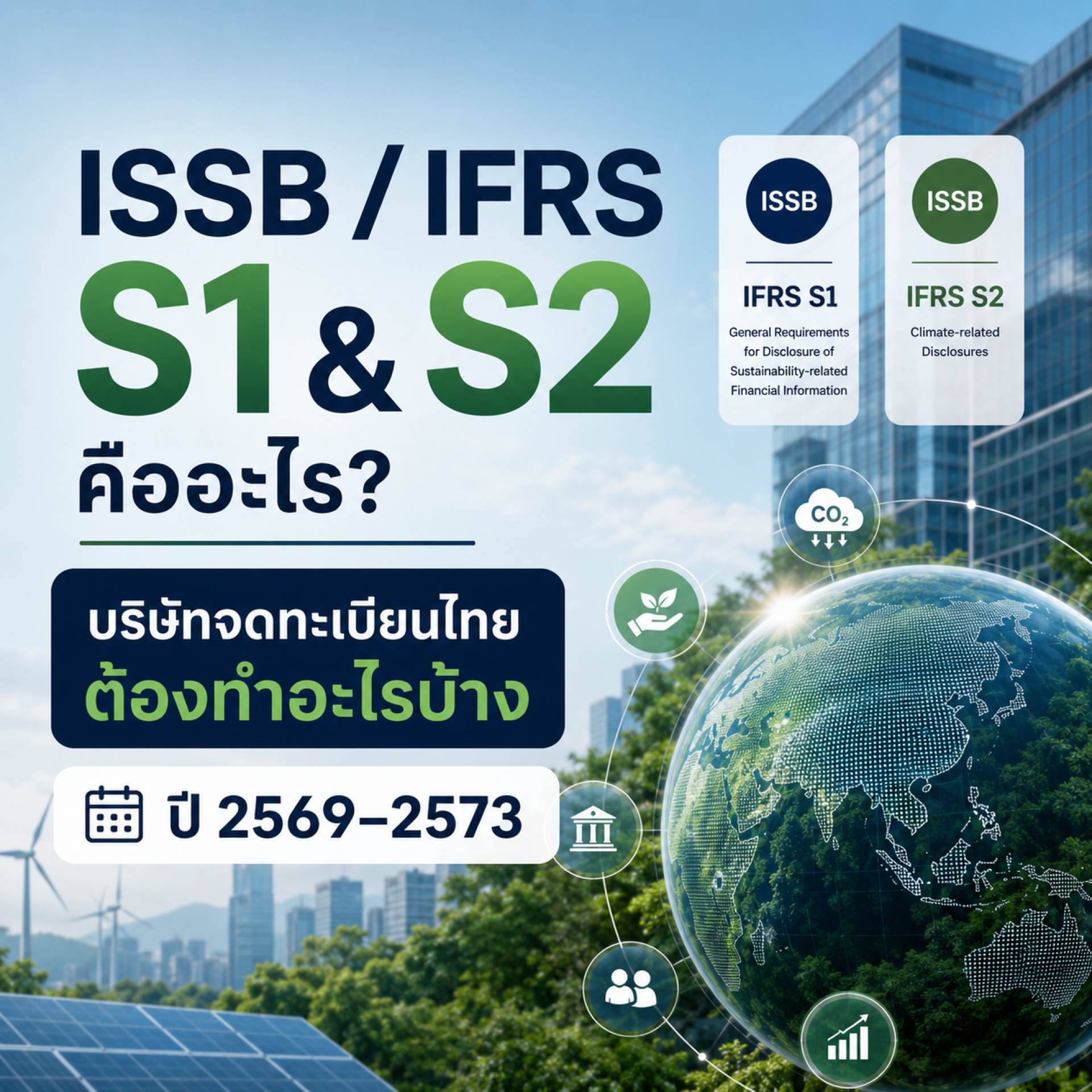
▪ IFRS S1 — General Requirements for Disclosure of Sustainability-related Financial Information: Sets out the overarching principles for reporting on all material sustainability topics — environmental, social, and governance — through the lens of financial materiality.
▪ IFRS S2 — Climate-related Disclosures: Focuses specifically on climate-related risks and opportunities, requiring disclosure across governance, strategy, risk management, and metrics and targets. IFRS S2 is fully aligned with the TCFD framework.
In short: IFRS S1 covers all material sustainability topics. IFRS S2 goes deep on climate. Most large Thai companies will need to comply with both.
3. Thailand's Mandatory Disclosure Timeline
The Securities and Exchange Commission (SEC) of Thailand has established a phased implementation roadmap for ISSB Standards:
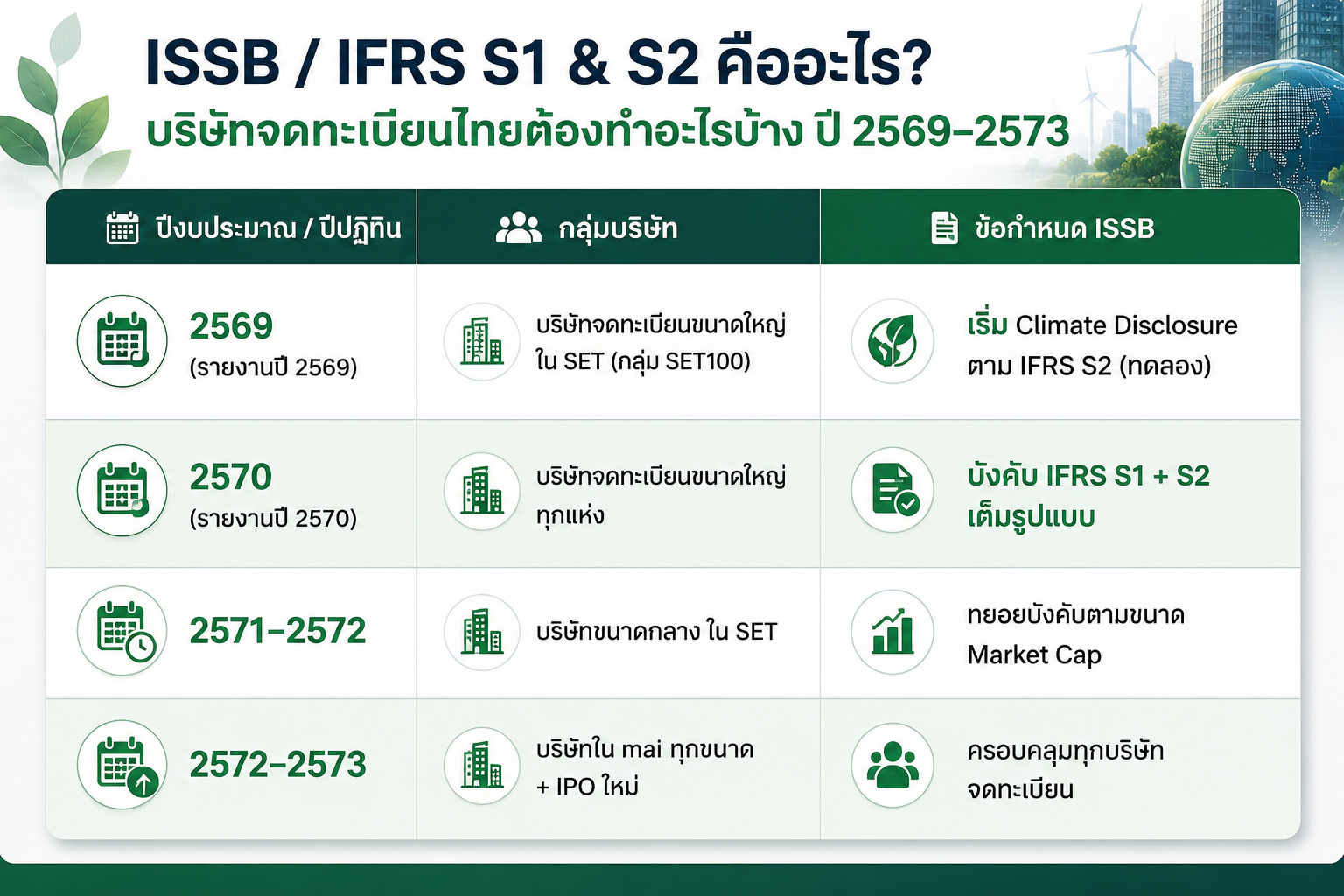
*Note: Timelines are subject to revision based on ongoing SEC consultations. Monitor www.sec.or.th for the latest updates.
4. What Must Companies Actually Disclose?
Under IFRS S2, companies must report across four pillars — mirroring the TCFD framework:
1. Governance: Board and management oversight of climate-related risks and opportunities.
2. Strategy: How climate risks and opportunities affect the company's business model, strategy, and financial planning — including scenario analysis.
3. Risk Management: The processes used to identify, assess, prioritise, and monitor climate-related risks.
4. Metrics and Targets: GHG emissions (Scope 1, 2, and 3), climate-related targets, and performance against those targets.
5. Key Challenges for Thai Companies
Based on ESG PRO's experience working with organisations across Thailand, three challenges consistently emerge:
▪ Scope 3 data collection: Gathering GHG emissions data across the value chain requires supplier engagement and internal systems that most Thai companies have not yet built.
▪ Internal capacity gaps: Most Thai sustainability teams remain small and lack direct expertise in ISSB standards, scenario analysis, and TCFD-aligned reporting.
▪ Compressed timelines: For large listed companies, the window is narrow. A full ISSB readiness programme — from Gap Analysis to Assurance-ready reporting — requires 12 to 18 months of structured effort.
6. How ESG PRO Can Help
ESG PRO is Thailand's leading specialist sustainability consultancy, certified at Level 1 by the Thai Ministry of Finance. Our team of more than 20 dedicated experts provides end-to-end ISSB support, including:
▪ ISSB Gap Analysis: A structured assessment of where your current reporting stands against IFRS S1 and S2 requirements.
▪ Climate Risk and Scenario Analysis: Physical and transition risk assessment aligned to TCFD and IFRS S2.
▪ GHG Inventory and Scope 3: Full corporate carbon footprint covering Scope 1, 2, and 3 per GHG Protocol.
▪ ISSB Disclosure Report: A complete, Assurance-ready sustainability disclosure report.
Frequently Asked Questions
Q: How does ISSB differ from GRI?
A: GRI focuses on multi-stakeholder reporting — disclosing a company's impacts on the environment and society. ISSB applies a single-materiality lens, focusing on how sustainability issues affect enterprise value for investors. Both can be used together, and many Thai companies already do.
Q: Should companies outside the mandatory timeline start preparing now?
A: Yes, without question. FTSE Russell and international investors are already screening using ISSB-aligned data. Companies that wait until the deadline face significantly higher preparation costs and reputational risk.
Q: What does ISSB Assurance involve?
A: Assurance is independent third-party verification that the disclosed information is accurate and complete. SEC Thailand is expected to require Limited Assurance initially, progressing to Reasonable Assurance for larger entities. ESG PRO prepares clients' data and reports to meet Assurance-ready standards.
Q: How long does a full ISSB compliance programme take?
A: For most large SET-listed companies, a comprehensive programme from Gap Analysis to Assurance-ready report takes between 12 and 18 months. Starting now is critical for companies approaching the FY2027 full mandate.