FTSE Russell ESG Scores vs SET ESG Ratings: 10 Key Differences Thai Executives Must Know (2026) | ESG PRO
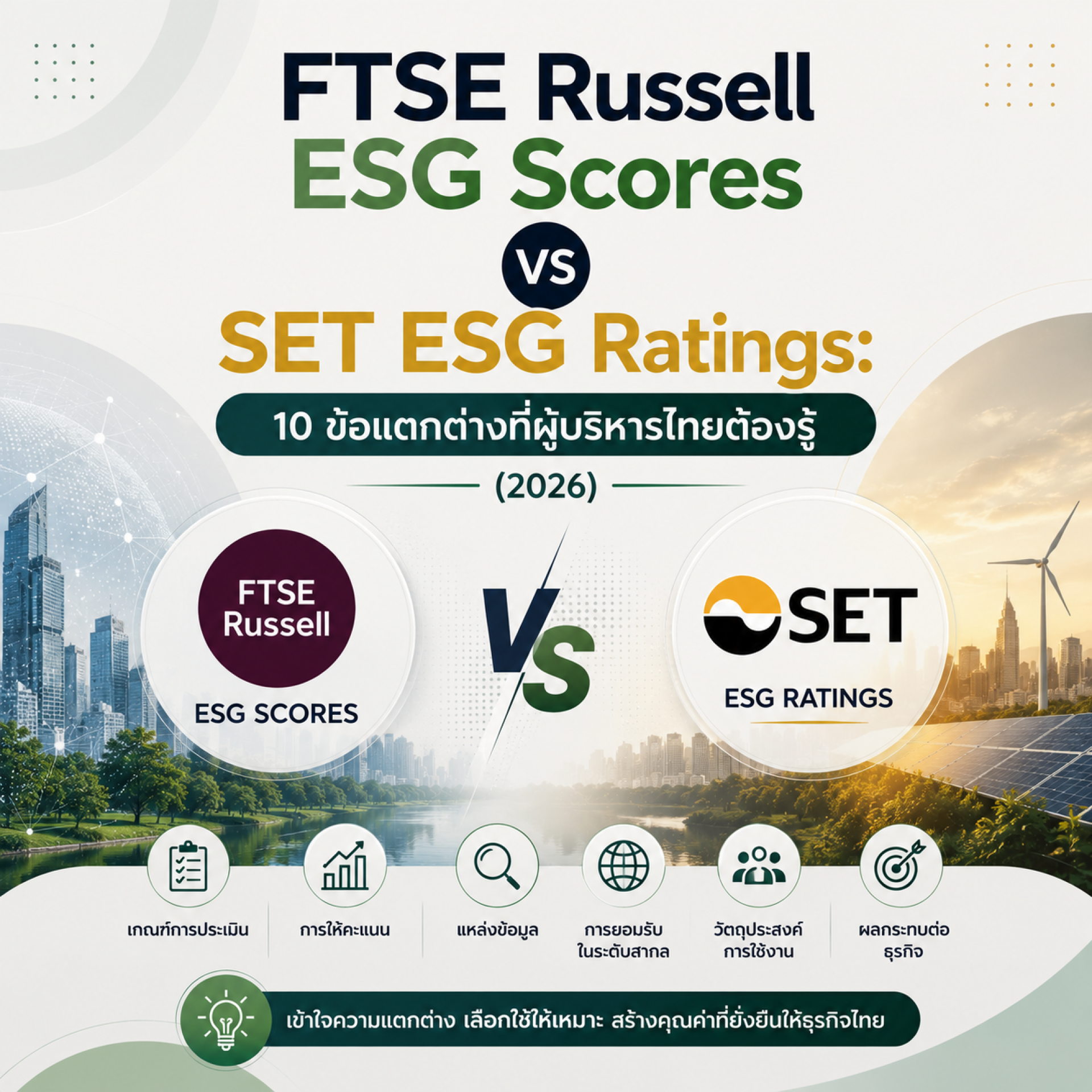
From 2026 onward, the Stock Exchange of Thailand (SET) will transition from the long-standing SET ESG Ratings to FTSE Russell ESG Scores. This is not a rebranding. It is a structural change in how Thai listed companies are assessed one that will reshape scores, rankings, and global visibility among institutional investors.
| Key takeaway: Thai listed companies that earned an AAA in SET ESG Ratings may receive a lower FTSE score than expected, because the framework and data sources differ fundamentally. Preparing now is a board-level risk issue. |
Background: Why the Transition
SET ESG Ratings was developed by SET to assess Thai listed companies in a domestic context. FTSE Russell ESG Scores, operated by LSEG (London Stock Exchange Group), is a global framework applied to over 13,000 companies worldwide. The transition aligns Thai companies with a single international standard, making them directly comparable to global peers and more discoverable to foreign investors who already use the same framework.
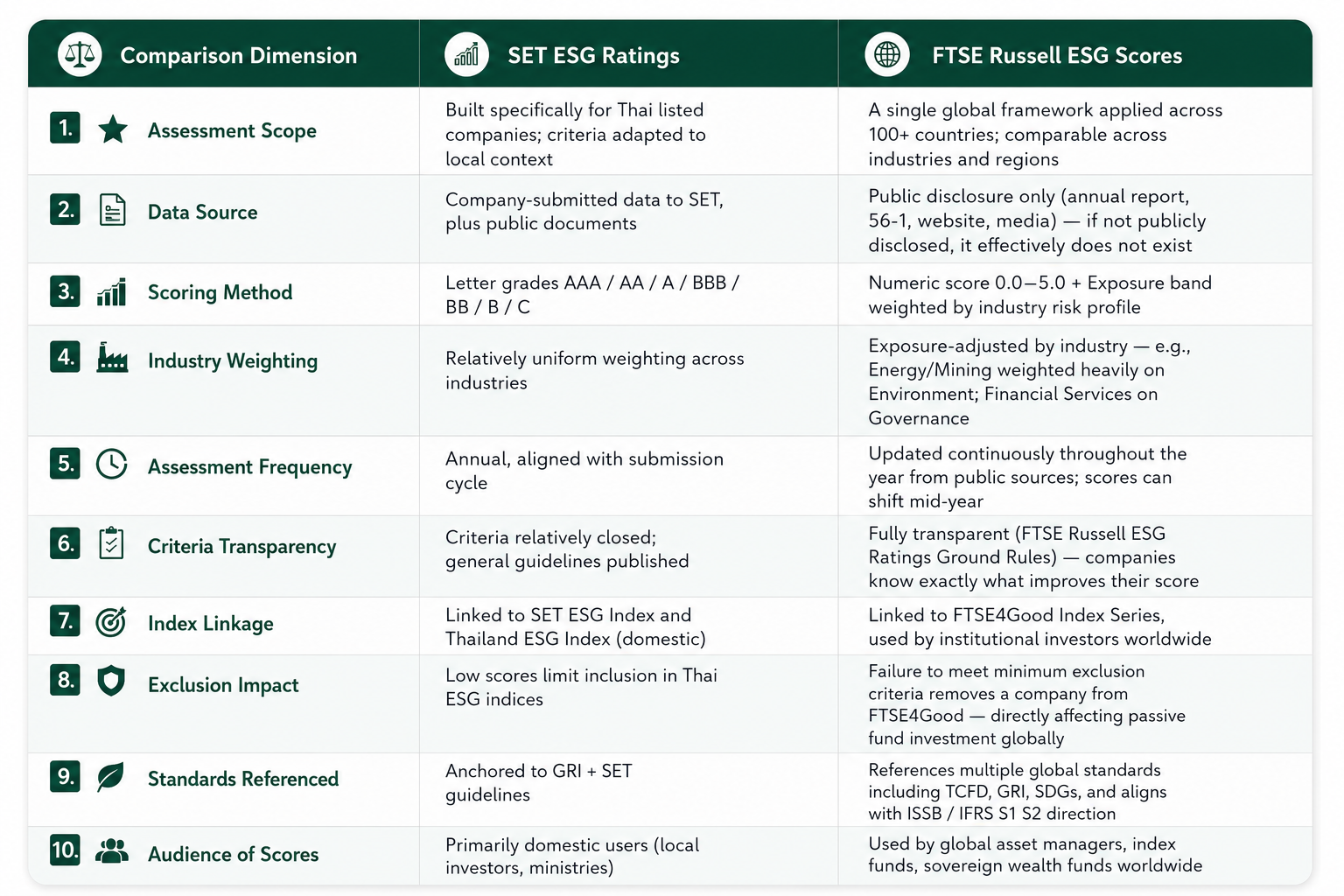
10 Critical Differences Executives Must Understand
Common Misconceptions Among Thai Executives
Misconception #1: "We have AAA, so we will be fine"
Reality: FTSE scores are relative to global peers within the same industry. A Thai AAA may simply mean "good within Thailand." Benchmarked against global peers in the same sector, the same company may land in the 2.x–3.x range.
Misconception #2: "Submitting complete data is enough"
Reality: FTSE draws exclusively from public disclosure. If ESG policies or performance are not publicly disclosed (e.g., held internally or submitted only to SET), the system treats them as non-existent and scores accordingly.
Misconception #3: "The change disadvantages us"
Reality: Prepared companies benefit significantly. Inclusion in FTSE4Good Thailand Index (and FTSE4Good Emerging) makes a company discoverable to global funds using the same framework, expanding the foreign investor base.
4 Steps to Prepare for the Transition
1. Gap Assessment
Compare current disclosure against the FTSE Russell ESG Ratings Ground Rules to identify missing categories particularly Governance, Climate Strategy, and Supply Chain
2. Disclosure Enhancement
Draft or upgrade policies and disclosures in the 56-1 One Report and corporate website to align with the indicators FTSE observes
3. Data Readiness
Organize ESG data systems so information can be published quickly — especially emissions, targets, and performance metrics that FTSE scores
4. Mock Scoring
Run a mock assessment before the official cycle to estimate the likely score and identify where to adjust upward
What We See in Practice
From ESG PRO's gap assessment work with several SET100 clients, we found that over 80% of companies rated AAA in SET ESG Ratings have at least three disclosure gaps against FTSE criteria most commonly:
- Climate Scenario Analysis — largely undisclosed
- Human Rights Policy & Due Diligence — policy exists, but process not disclosed
- Anti-corruption coverage of supply chain — typically covers only the organization itself
| ESG PRO recommendation: Do not wait for the first FTSE score before acting. The baseline score becomes the reference point for investors. Starting low makes upward movement slow and hard. Begin your Gap Assessment before end of 2026 to gain an edge. |
Why Act Now
The transition to FTSE Russell ESG Scores is not a burden — it is an opportunity to place Thai companies on the same map as global leaders. Companies that prepare early gain advantage in score, access to foreign investors, and readiness for the increasingly stringent international standards ahead.
Want to Check Your Company's Gap?
| Free offer: FTSE Russell Readiness Gap Assessment (60 minutes) for Thai listed companies by ESG PRO's GRI-certified and AccountAbility (ACSAP) accredited team. Call +66 92-834-0989 or email Contact@esgprothai.com |
Sources
- SET × FTSE Russell partnership announcement — set.or.th
- FTSE Russell ESG Ratings Ground Rules — ftserussell.com
- SET Sustainability Hub — setsustainability.com